General Description
To obtain high quality graphite electrodes and cathodes produced from calcined coke, a heat-treatment to a temperature close to 3000°C is mandatory. The aim of this step is to obtain a graphitized structure of the material, essentially to reach very low electrical resistivity levels. At the production scale, breakage of the electrodes could occur, mainly because of their puffing propensity, when the power curve is not optimized by taking into account the length change of the electrodes during the graphitization process. Knowing in advance the electrode behavior by pilot evaluations is necessary.
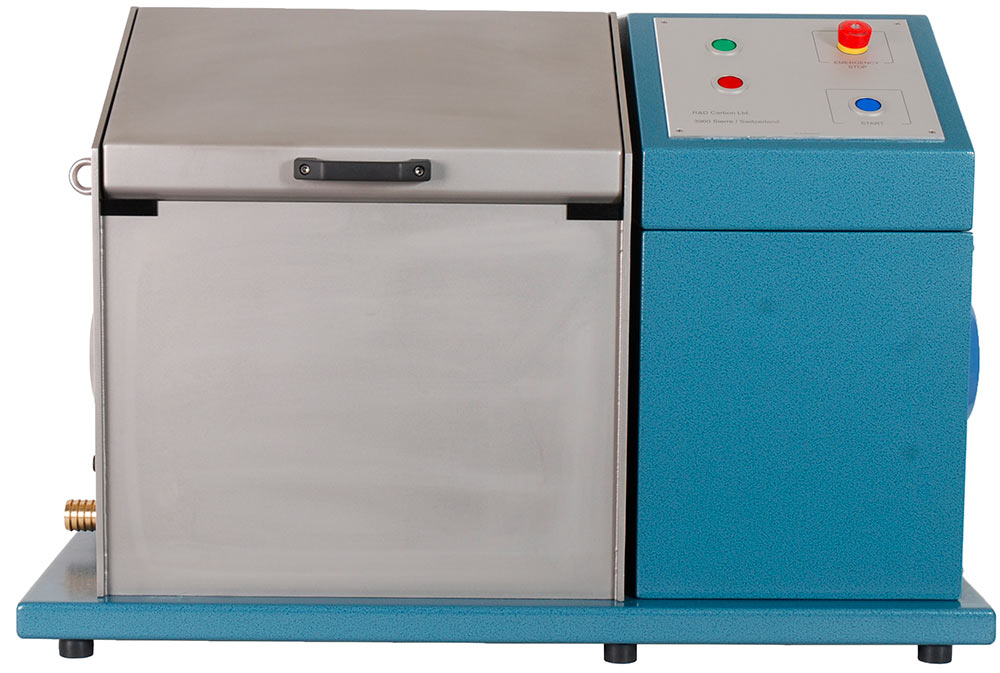
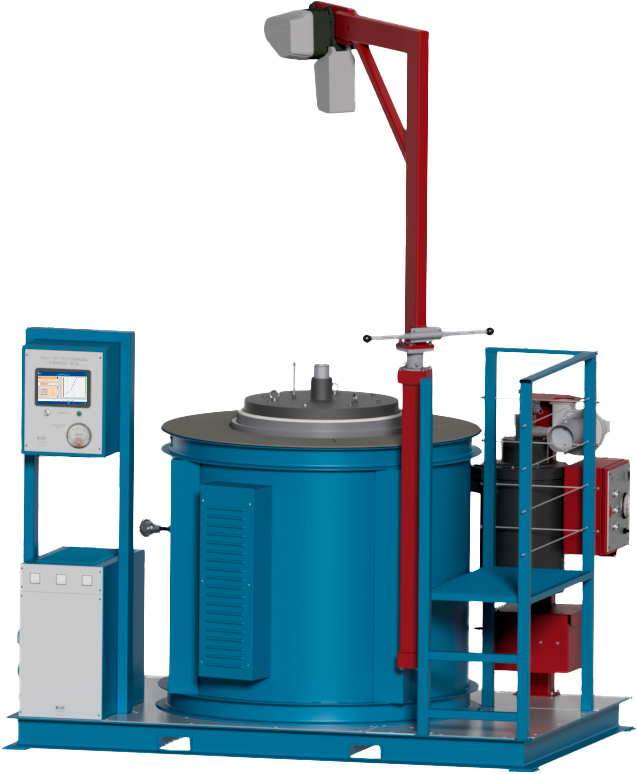
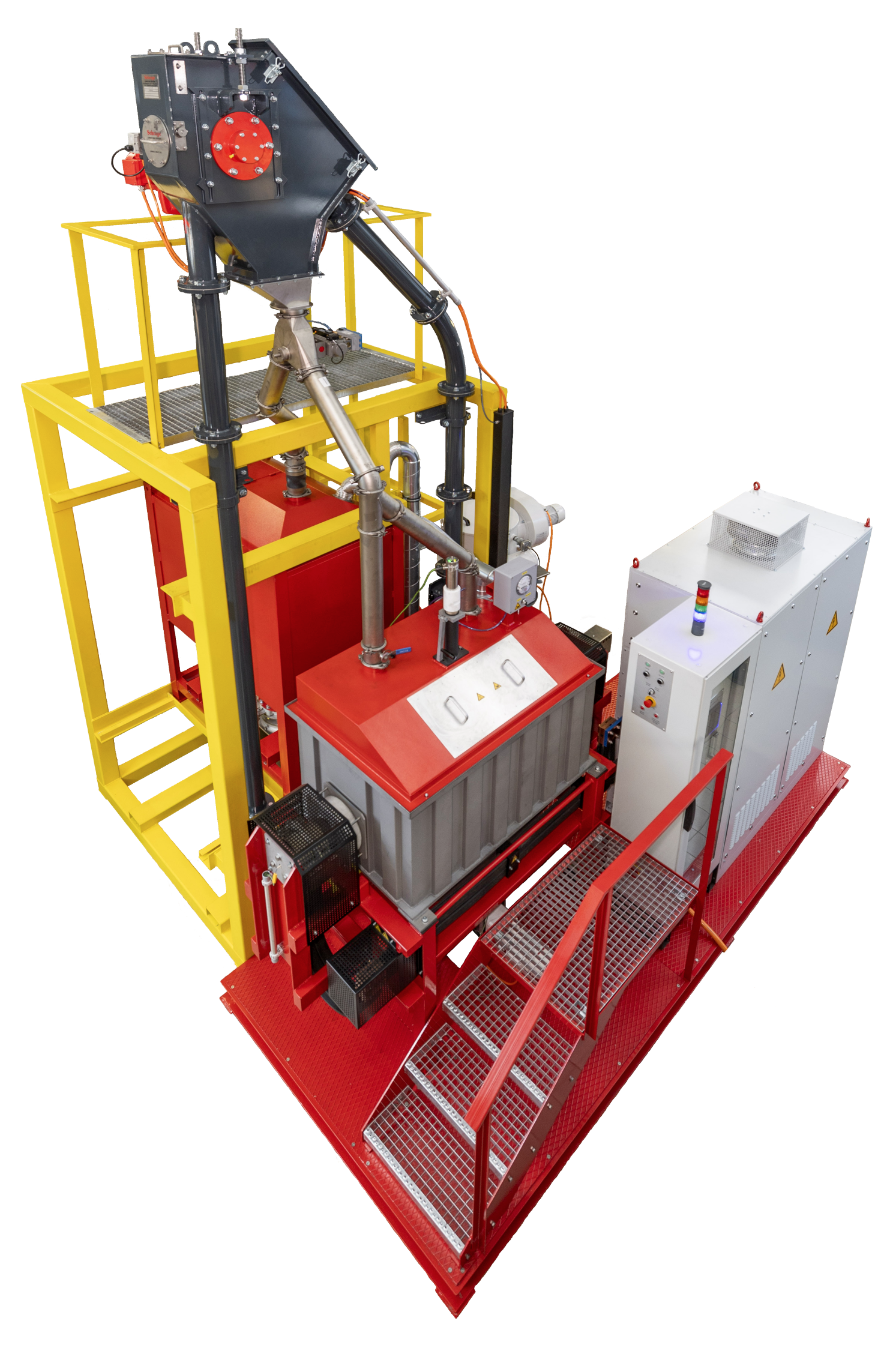
The graphitization can be conducted with the RDC-201 apparatus, which has the exact same principle as a full-scale lengthwise graphitization furnace. A column of sample core with a diameter of 50 mm and a total length of 470 mm is clamped between two graphite electrodes with a specific pressure. The heat-up rate is automatically controlled by the regulation of the electrical current flowing through the column of samples. Specific heat-up schedules can be defined up to a maximum temperature of 3000°C and a heat-up rate up to approximately 500°C/h. During the entire process, the length change of the column is measured and recorded. In addition, the column can be replaced by a graphite box to graphitize granular carbon samples (approximately 500 g per run depending on the bulk density of the material). After the graphitization step, the materials are ready for the measurement of their properties.
Technical Information

Other Electrodes, Granular, Lining Equipment