General Description
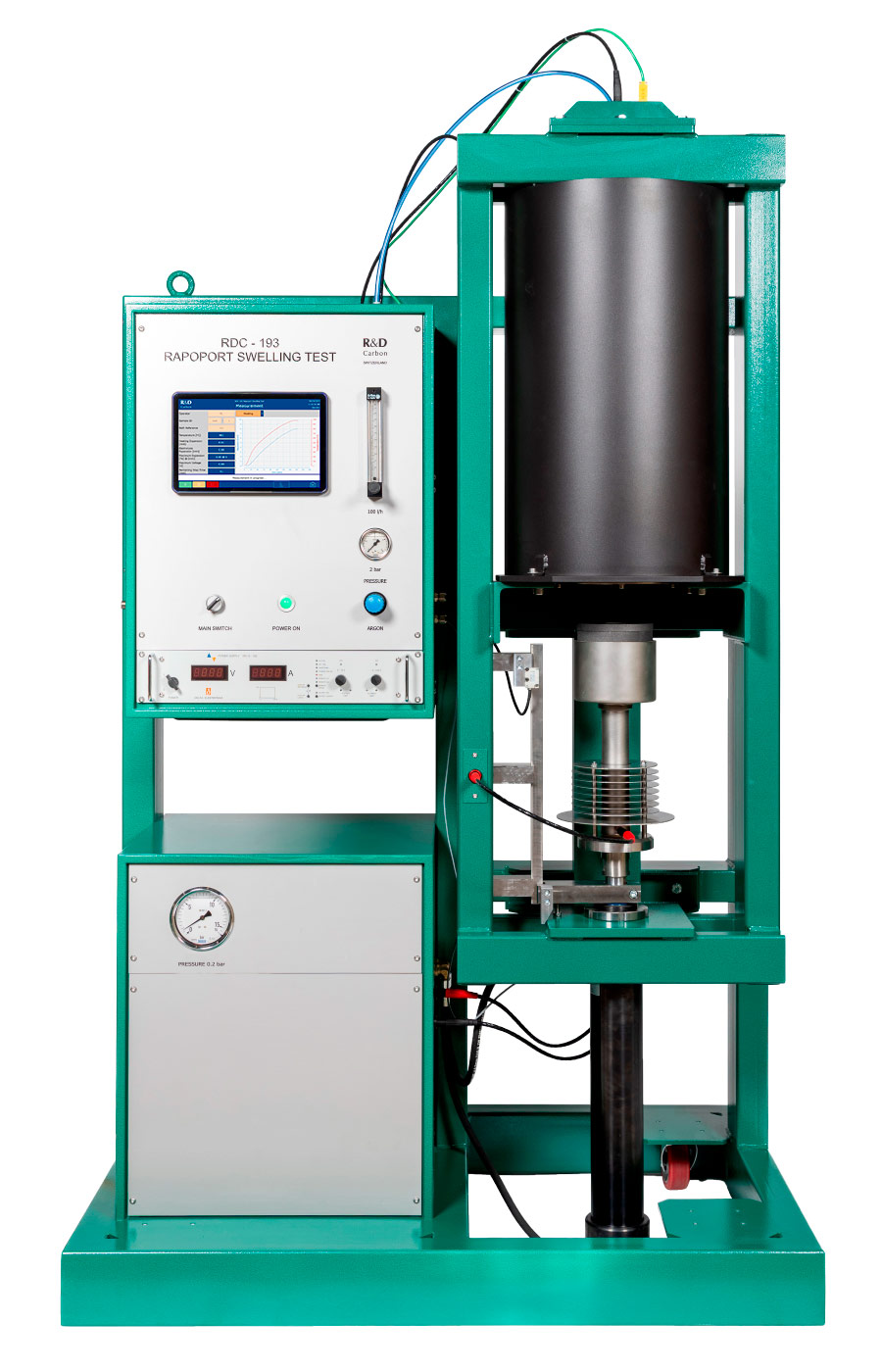
The resistance towards the deterioration of cathode carbon materials, used as bottom blocks of an aluminium electrolysis cell, following an attack by sodium and electrolyte is one of the predominant properties affecting the lifetime of a cell. The knowledge of the cathode expansion due to sodium penetration is essential for the optimization of the cell design. The Rapoport expansion test has specifically been developed for this purpose.
The measurement is conducted with the RDC-193 apparatus, consisting of a small electrolysis reduction cell where the length change of the cathode material can be measured. A cathode sample with a diameter of 30 mm and a length of 100 mm is placed into a graphite crucible surrounded by electrolyte bath with a given cryolite ratio. After heating the furnace to 980°C, the electrolysis process is started for a given period of time and the length change of the cathode sample is recorded. The Rapoport expansion is calculated as the maximum expansion expressed as a percentage of the initial length of the sample.
Technical Information

Other Lining Equipment