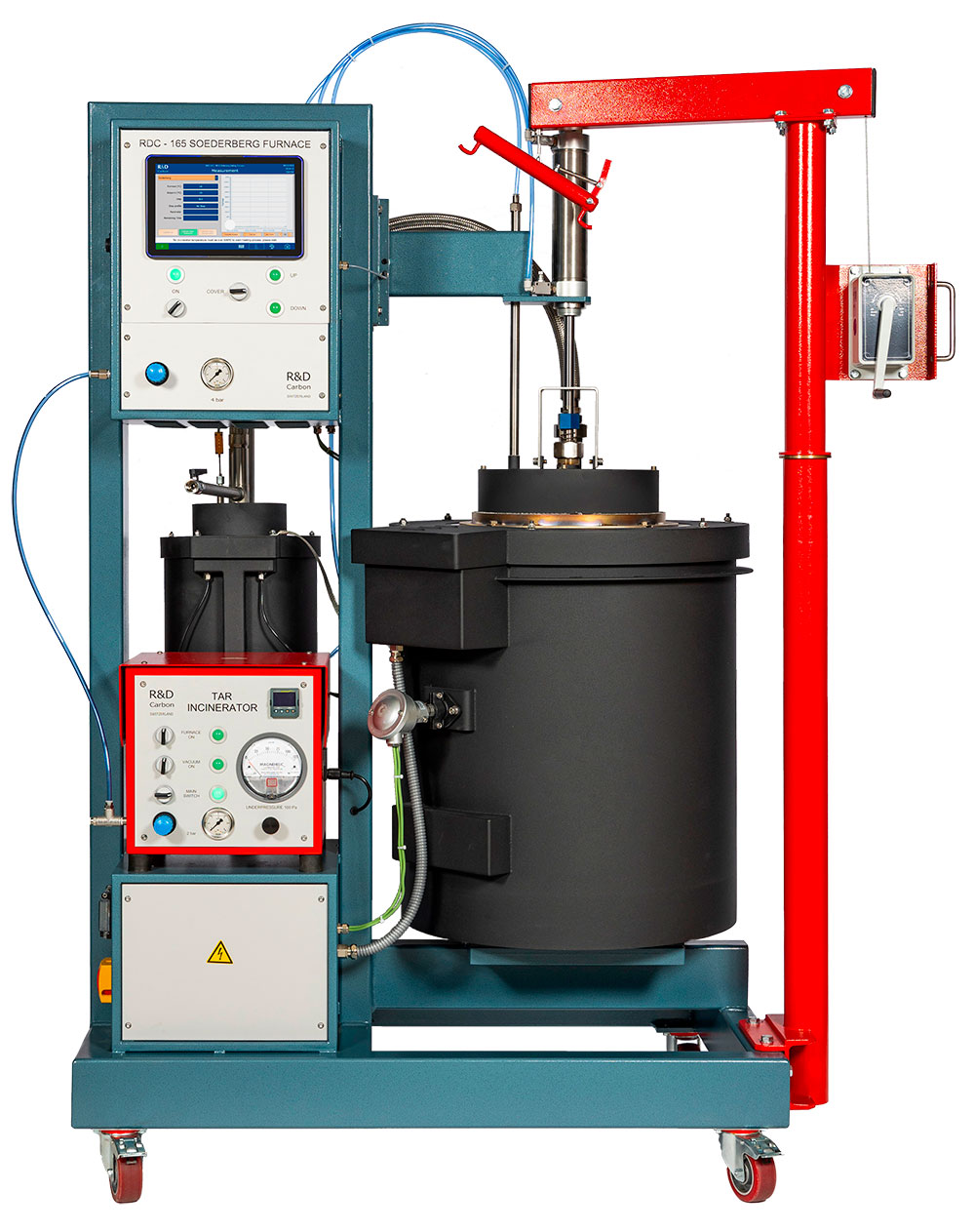
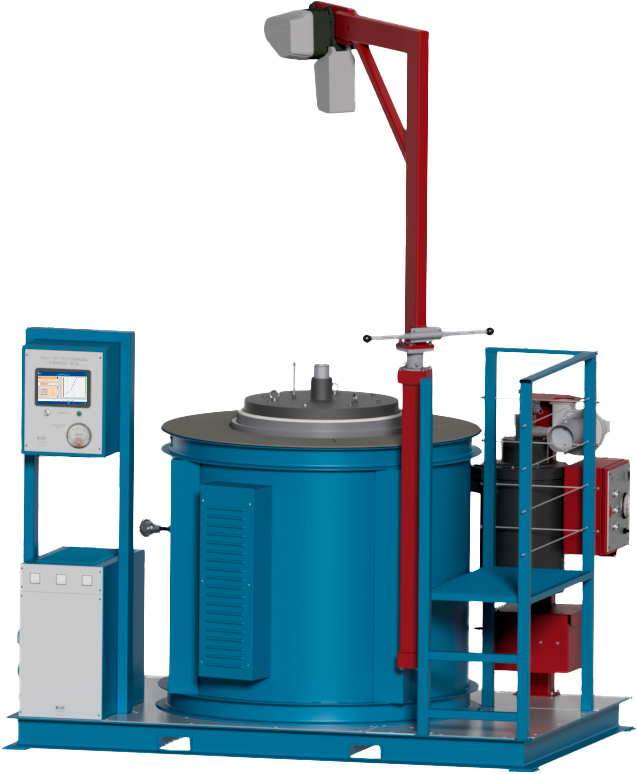
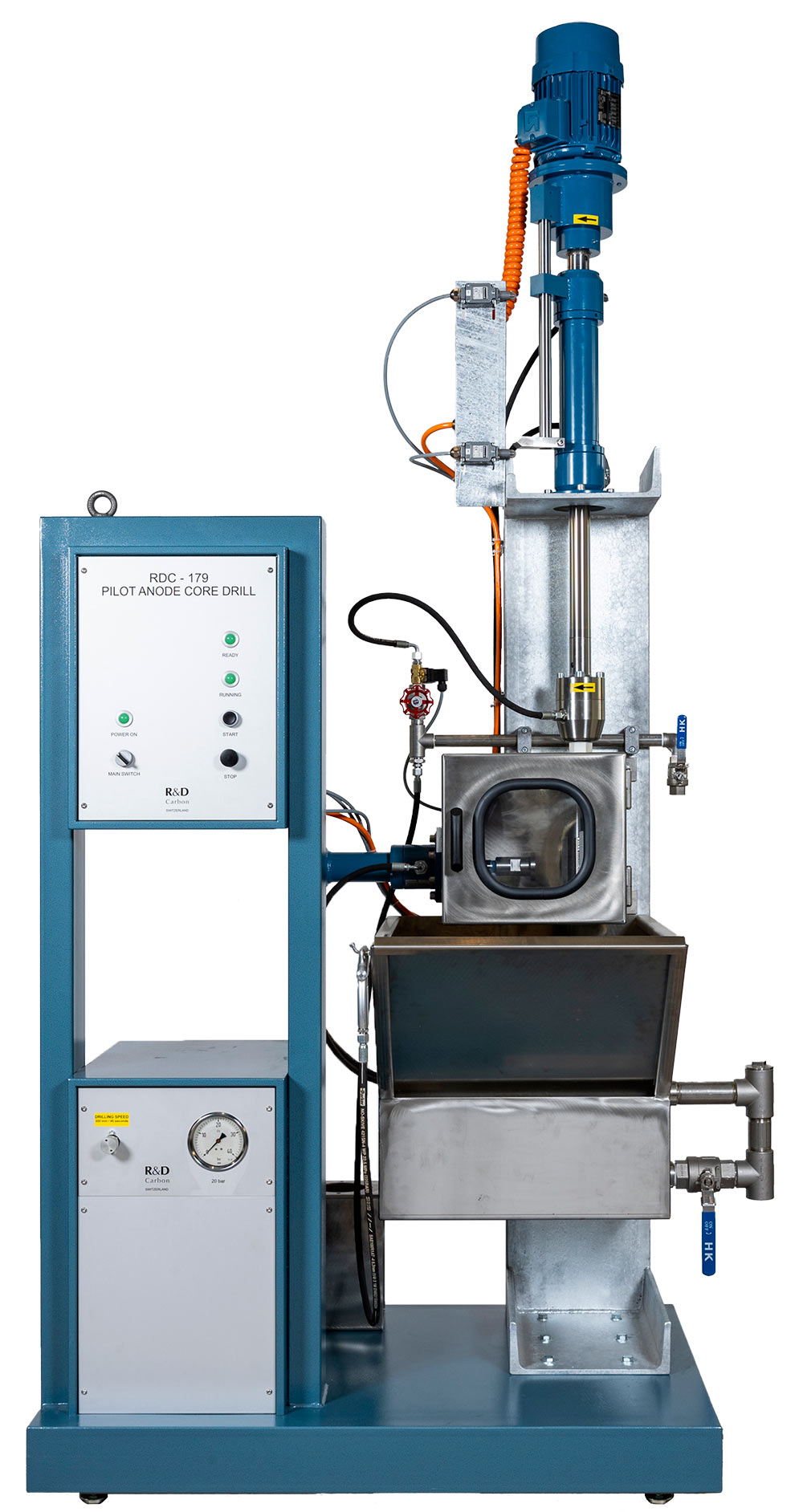
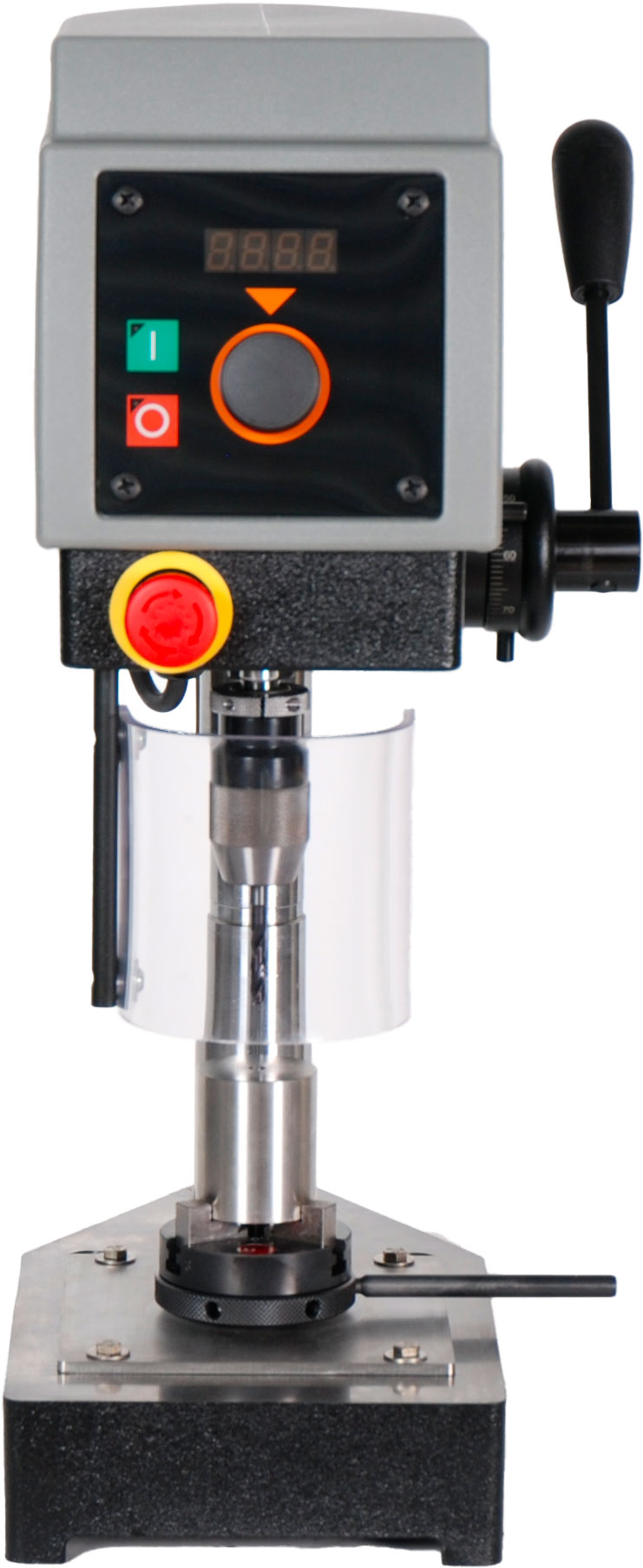
General Description
The coefficient of thermal expansion of an electrode is an important parameter to predict its thermal shock resistance. When an electrode at ambient temperature is put in operation at a high temperature, a heat wave will penetrate the block body and create a temperature gradient. A high coefficient of thermal expansion increases the strain in the body and, thus, the thermal stresses to the extent that cracking can occur.
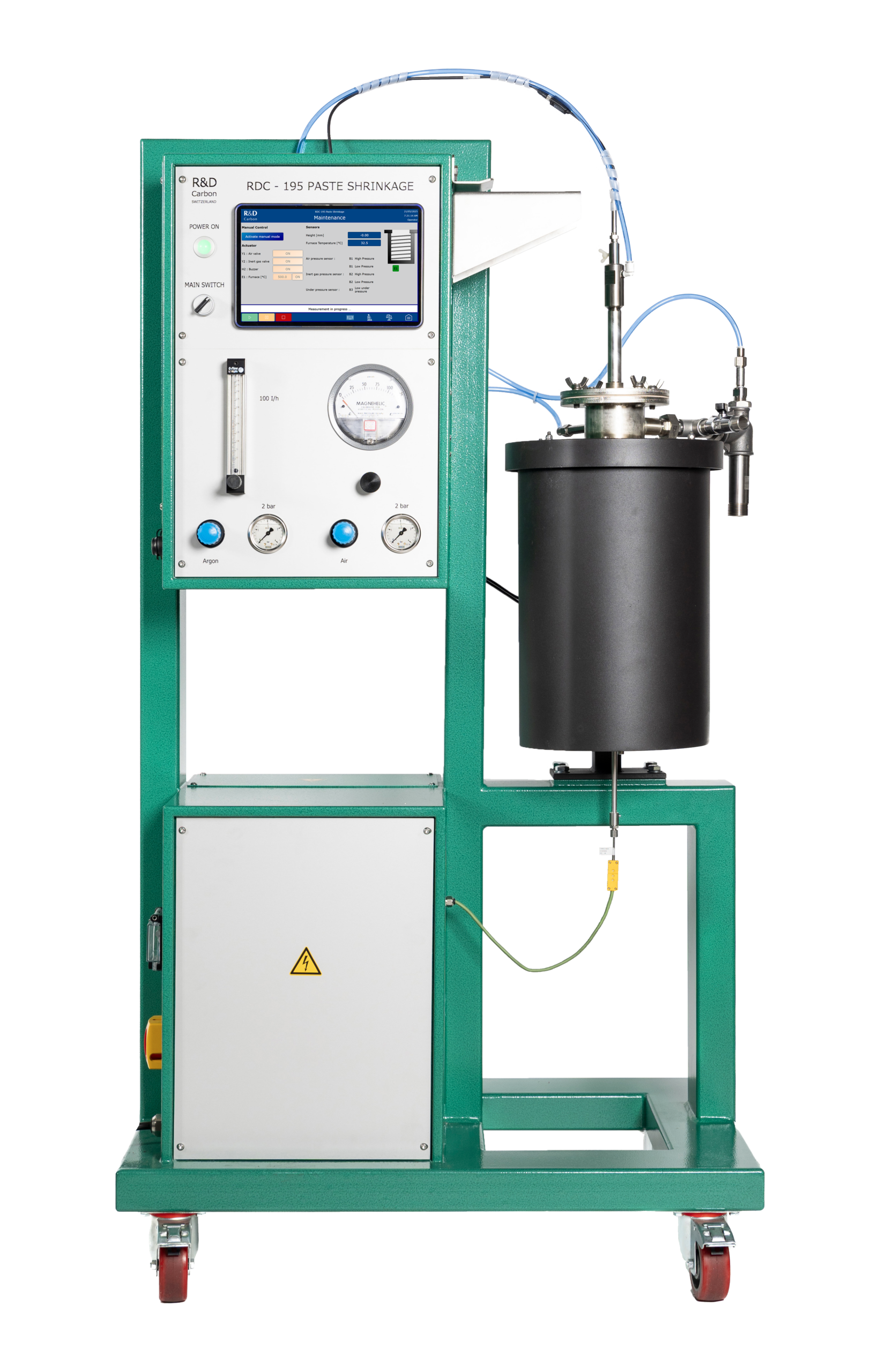
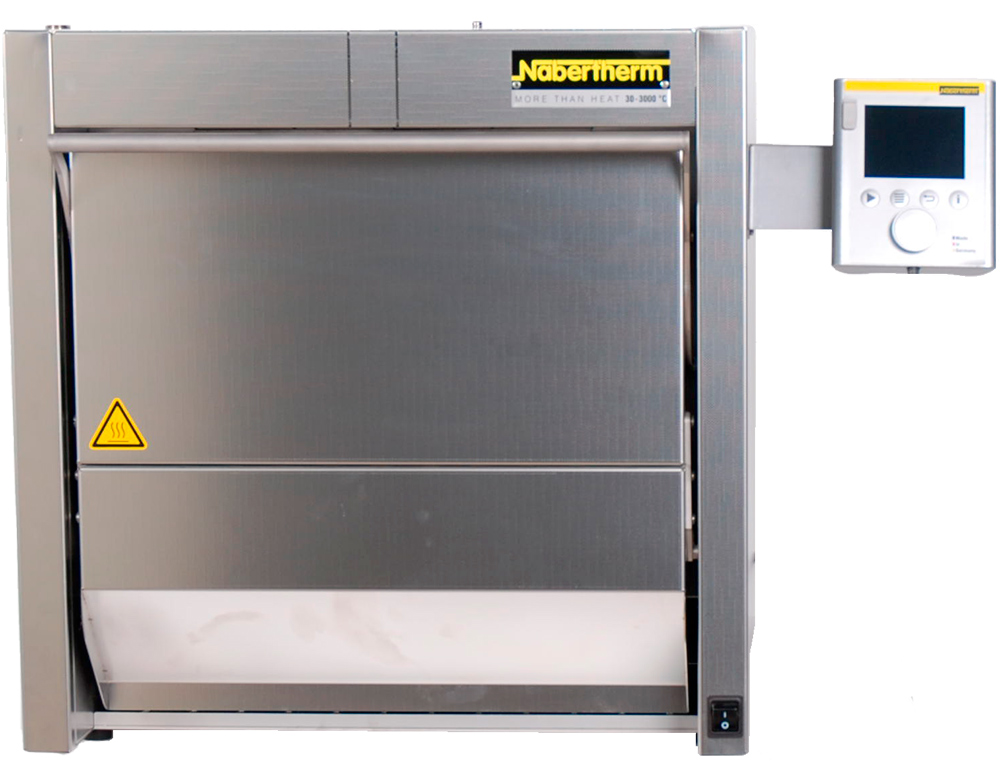
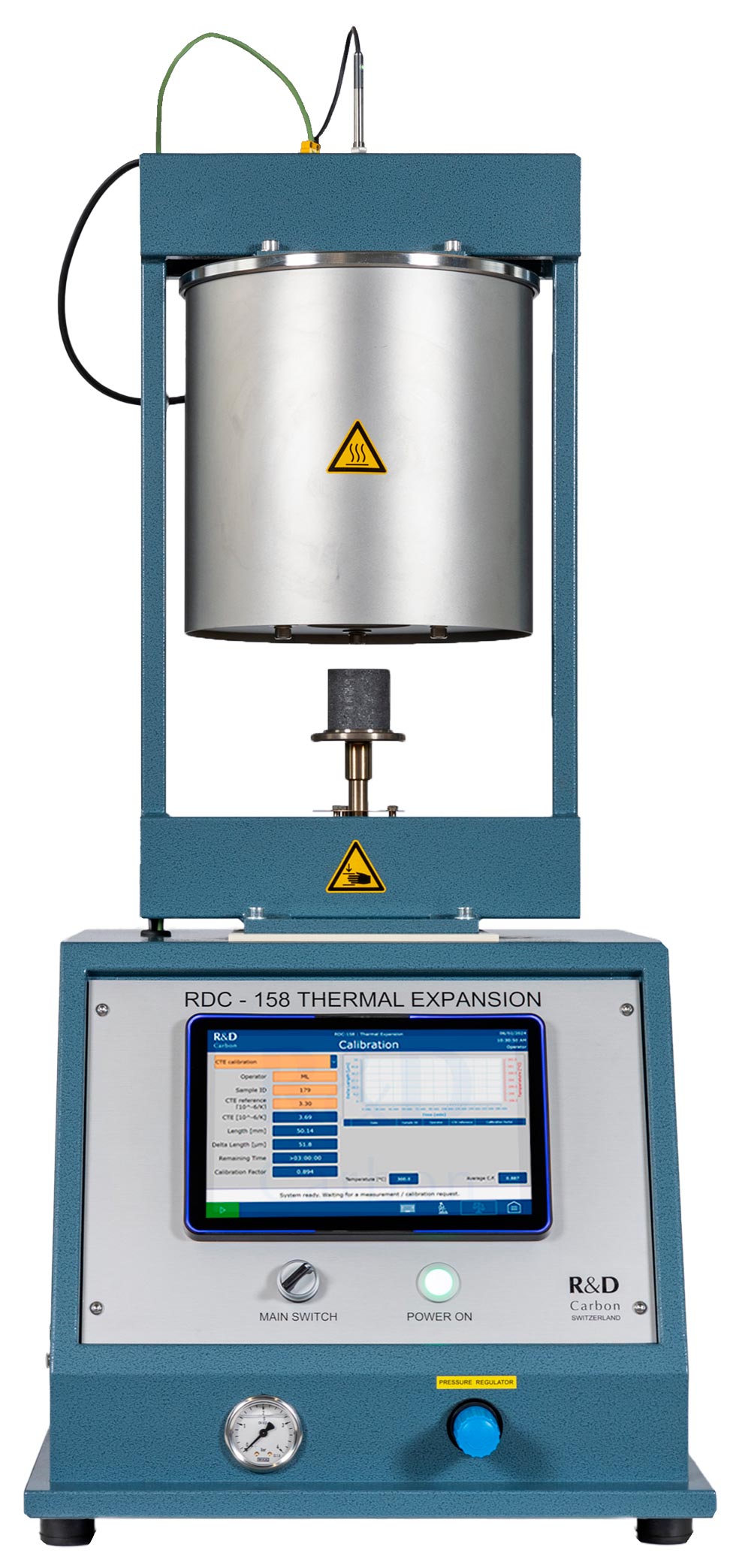
The measurement is conducted with the RDC-158 apparatus, where a core sample with a diameter of 50 mm and a height of 50 mm is placed in a furnace, preheated at 300°C, for a given period of time. The length change at the end of the test is recorded and used for the calculation of the coefficient of thermal expansion in 10-6/K.
This equipment is not suitable for the quality control of graphite electrodes, as different temperature ranges and a higher precision level would be required.
Technical Information
Additional Recommended Equipment
Video

Other Electrodes, Lining Equipment